

You must log in or # to comment.
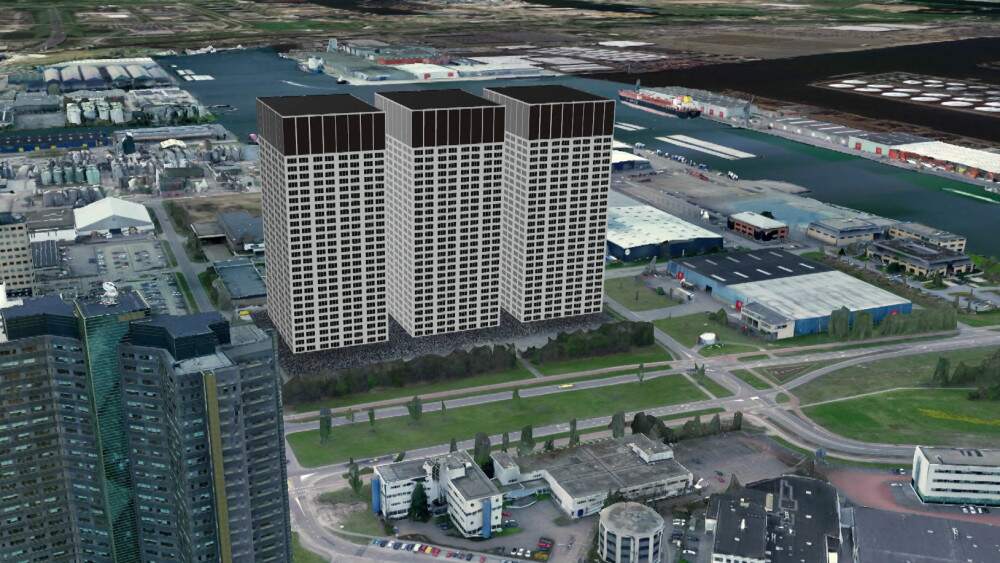
They threw balloons over the fence to weaken concrete with Salt, Acetic Acid, Peroxide, and acrylic paint at some bare concrete and steel where a facility is going to be built.
I feel like the guy with the paint didn’t understand the memo.
I feel like none of these things will actually weaken concrete, unless it’s being added to the concrete mix itself.
The concrete is actually highly acidic but the outer layer cures to become alkaline and the two layers together end up becoming water resistant, so by adding acid to the surface it can lose its water repellent capability and weaken faster.
If the concrete were sealed with a wax or an acrylic then Acetone would also be effective.
Oh really? I honestly never considered that possibility and always thought of concrete as a kind of inert “stone,” I find this legitimately interesting.
My understanding is that the genius of such attacks is they don’t actually have to do the damage but if there’s the fear of chemical damage you don’t want to build the rest of a building on top of it.
This right here is the answer. The possibility that the concrete cure was all or partially disrupted can mean the concrete has to go away and be re-poured.
That would be a great reason to announce the damage as well, which they did.
Check out the Hoover Dam. It’s concrete is still curing to this day!
Stone itself isn’t inert either?
concrete is calcium carbonate and silicate, both are basic. it’s also slightly porous but mostly waterproof by itself, doesn’t matter that hard in this application since there will be AC removing water from the inside 24/7 anyway
Carbonation causes acidity and the traditional methods of creating concrete involves furnaces which introduce various forms of carbonation. The Calcium Carbonate once dissolved in water will start to form the Calcium Hydroxide layer on the surface, thats the alkaline layer, and deeper in the carbonation creates acidity.
calcium carbonate is still basic and even hydrogen carbonate is basic enough to be protective against steel corrosion
The Calcium Carbonate once dissolved in water will start to form the Calcium Hydroxide layer on the surface, thats the alkaline layer, and deeper in the carbonation creates acidity.
100% wrong, how come there’s more carbon dioxide inside than outside, you’re starting from calcium hydroxide and silicate. on the surface there’s some carbonate formation from carbon dioxide, but when it can’t get there calcium silicate forms instead. either way both are basic
Well, now you’re contradicting yourself from earlier when you stated we were discussing Calcium Carbonate and Silicate.
The Calcium Carbonate degrades into Calcium Oxide. Calcium Oxide will form Calcium Hydroxide on the cured surface.
The only reliable way to seperate the Calcium from the oxidation afaik would be the introduction of Chlorine, so you’re definitely not seeing the reverse happening regardless of how much carbon dioxide there is.
you see, you can be as wrong as you want to be. i won’t be teaching you middle school level chemistry against your will in a comment section. in concrete Ca2+ remains Ca2+, be it as hydroxide or carbonate or silicate and it cannot become reduced in normal concrete conditions and definitely it can’t be oxidized.
The Calcium Carbonate degrades into Calcium Oxide
no it fucking doesn’t, this is what happens when cement is prepared in a kiln. near surface of curing concrete calcium hydroxide captures carbon dioxide from air, then this crust of precipitate blocks it from moving deeper. which is why the rest of calcium hydroxide reacts with silica forming calcium silicate, which takes more time and is responsible for late strengthening. before you lost plot i was talking about oxidation of steel rebar, and it depends on many things, but for regular carbon steel if there’s no oxygen then it’s much slower. and because concrete is not very permeable to oxygen, there are all these engineering requirements about how deep rebar has to be. anyway, a little bit of vinegar would be just neutralized by calcium hydroxide from concrete and won’t do anything, a little bit of salt would be diluted massively and also won’t do anything, hydrogen peroxide would decompose because anything will do that
Sugar water would have worked better.
Just needs a supply of
Dioxygen difluorideChlorine trifluoride [ref] which when spilled in large quantities “burned its way through a foot of concrete floor and chewed up another meter of sand and gravel beneath”A quick visit to wikipedia gives me this lovely paragraph which makes me nervous:
The other main property of this unstable compound is it’s oxidizing power, although most experimental reactions have been conducted near -100 °C (173 K). Several experiments with the compound resulted in a series of fires and explosions. Some of the compounds that produced violent reactions with O2F2 include ethyl alcohol, methane, ammonia, and even water ice.
Flourine is really scary stuff. If we’re going to toss some FOOF at the concrete, we could also use ClF3. Clorine Triflouride is another angry oxidizer that I’m pretty sure is hypergolic with sand of all things.
More like tossing FAFO
badum’tsh
there are also more damage-susceptible things in a datacenter
Oh definitely. I was just speaking on concrete.
Walls aren’t up yet, just an empty foundation and some steel beams.
these things can corrode rebar slightly
Only if it is uncoated iron rebar. There are also coated rebar, galvanized rebar, stainless steel rebar, or fiberglass rebar.
Iron is the most popular rebar among workers for its ability to be shaped by hand and easily cut, but it’s lacking in longevity due to its chemical vulnerability.
Galvanized is also weak to chemical attacks but from Alkaline attacks.
coated rebar isn’t, it’ll always get dinged somewhere. stainless is expensive and the real available scalable option is either galvanized or sometimes basalt fiber, or glass fiber but i’ve not heard about it too much. the most important factor in slowing down corrosion is how thick concrete layer is on top of rebar, because concrete is very slightly porous and will let oxygen in, but the thicker that layer is, the slower oxygen gets to rebar, then the slower corrosion is, and this means it takes longer for rust layer to grow enough for concrete around rebar to fail due to swelling, because rust takes more volume than corroding steel
a bit of vinegar might strip zinc layer, but won’t do too much and definitely it won’t matter long term until most of zinc layer is gone. salt also promotes corrosion but this also depends on oxygen availability and won’t be too fast, it would only matter if there’s salt in concrete in large amounts
Might not be the best way to do it, but hey, they’re doing something. I’m proud of them.
This organization is so insanely dumb.
So what now, if they didn’t clean it up they might have to replace small patches of concrete in 5 to 10 years. But if they cleaned it up the next day, there’s barely any harm done.
Previous action of them was blocking trains to protest climate change. You know, the big metal tubes running on electricity. The highly efficient alternative to combustion engine cars.
Whats next, chaining themselves onto solar panels? On windmill turbines? Like I said before, they are so fucking dumb.
Just wait for the data center to be finished and throw some molotovs. FFS.
Maybe it’s not about the actions themselves but raising public awareness for an issue. And as such they have obviously succeeded.
Destroy a bit of concrete = fairly big media coverage but probably just minor fines
Destroy a whole DC = very big media coverage but also probably many years in prison
But what do I know, I’m sure that I’m also insanely dumb.
but also probably many years in prison
You can just 3D print a drone or buy one on AliExpress and fly and deploy thermite bombs on those centers. As long as you don’t have fingerprints on any of it and deploy it covertly you should be fine. Go without your phone and cycle. Fly some drones in, then get the fuck out.
If Ukraine can take out a 3 million dollar tank with a 150 dollar drone, then so can you.
Maybe it’s not about the actions themselves but raising public awareness for an issue.
You’re not going to achieve the goal you want when you just make fun of yourself. People won’t take you serious when you’re just a laughing stock. And you probably achieve the oposite: people don’t want to be affiliated with those idiots in any way.
This is the same with veganism. Because some terror vegans made fun of themselves by acting like fucking idiots, veganism now has a bad name. Many people refuse to even think about what they are actually doing when eating meat “because fuck those stupid vegans, right?”. While all this time those vegans have valid points. But because they don’t know how to sell it properly, all they achieve is opposition and hate.
Extinction Rebellion consists of exactly those vegans.
Like I said before, they blocked trains to protest climate change.
I know many leftist activists in The Netherlands. They all do a major facepalm when you say the words Extinction Rebellion. Even the left, with the same goals and values, can’t take them serious and hate them for giving the left a bad name.
I’m not the person you’re replying to, I’m even not disagreeing with the premise as a thing so much as I am saying not gonna happen.
Having said that … Oh right the famously easy to get thermite bombs.
Also a lot of security you’d need to do to make it so you’re not traced back with a digital footprint to AliExpress and/or sites that served those 3d printable drone files.
Not to mention procuring all the other parts for the drone probably will leave a trace too. Maybe you could pay cash at a hobby shop some towns away for the servos and motors and such.
Plus you need to then get the equipment to fly it and modify the drone to carry munition.
Which brings us back to the super easy to get thermite bombs …
Your post can’t be a serious suggestion. It did give me a good chuckle though so I appreciate that.
thermite is a real diy compound. all you need is a file, some rusty iron and some aluminum. and the magnesium strip for the catalyst/fuse.
I suggested thermite because it’s so easy to make. Check this source. Print a canister, add a strong capacitor as ignition which engages when the release servo turns on. Really the simplest homemade burning device which burns through everything.
What trace is there when you download a drone model somewhere? Loads download these. Use TOR to be extra safe. Getting the sensors, motors and wires is also easy and untraceable. A while ago journalists managed to order 4 handgrenades after searching 30 min on the dark web, which got delivered. There is so much junk coming from Asia through websites like aliexpress. I recently ordered a bunch of arduino myself. It’s so easy to get what you need, untraceable, and building and printing a drone is also super easy. Controllers can be bought off the shelf too. A release and fire mechanism is also super easy: a 85 cents servo.
I’ve seen Ukraine make these drones from wooden twigs or plywood, with a print plate, 4 motors and printed rotorblades, and a servo as the release mechanism. You’re not printing gun parts, you don’t need specially produced parts or machines to start with.
With an ESP32 you can even add a 12 euro camera which will auto guide itself to its target so you don’t even need to control it. The code is freely available, training it would need a few photos of the target. Total costs would be ~50 euros, all build plans and code is free available online, as well as all the tutorials for soldering and uploading the code to the boards.
About the digital footprint: Just order stuff with a fake name, pay with gift cards bought with cash in stores ( like PayPal or aliexpress gift cards) ship it to a DHL pickup point, wear a cap and sunglasses when picking it up. Never bought drugs online? Or go to a hobby store for remote controlled stuff or an electronic parts shop. And maybe don’t buy everything from the same place and buy other stuff too. Have fun looking for the right guy while loads of people order generic electronic parts online. It’s like searching for a drug dealer by checking everyone who ordered plastic bags online.
Well then I hope you do all that, assuming you’re targeting the bad guys, and good luck in your fight.
At least they’re not throwing tomato soup on paintings.
Funny you say this, but the ones who did that are also with extinction rebellion.
Sssiiiiiiggggggghhhhhhh…