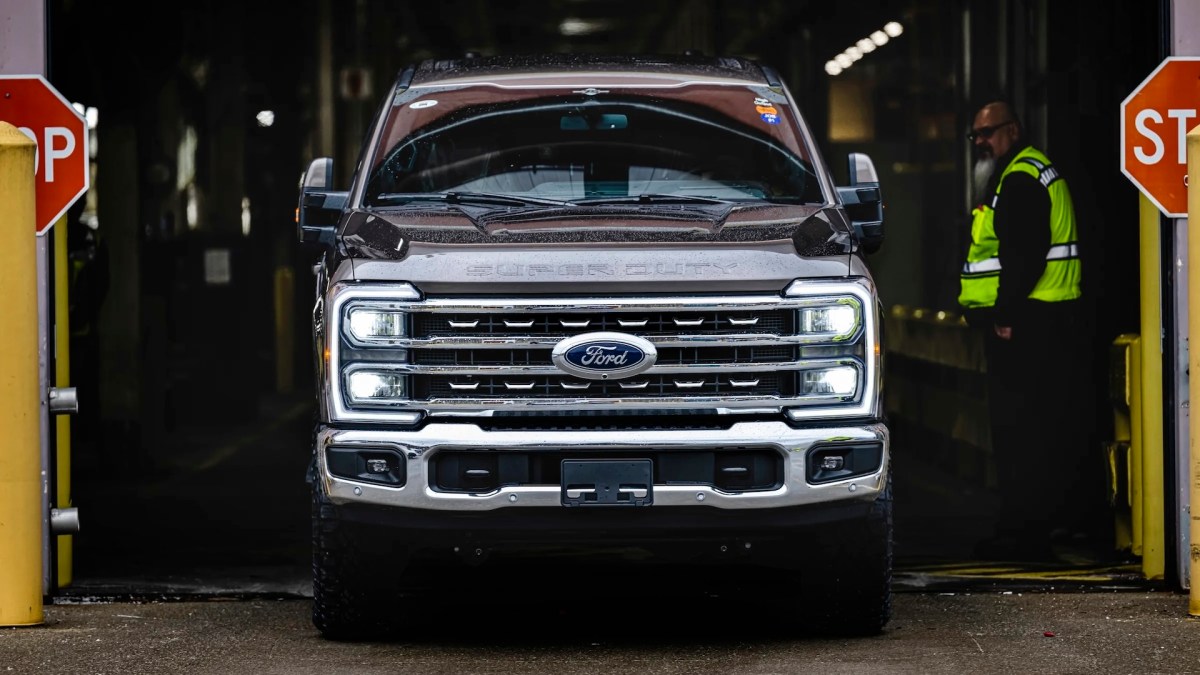
A new NYT analysis found that anyone shorter than 5-foot-6 — about half of American adults — would frequently be knocked to the ground in front of today's average vehicle.
The kinetic energy difference between a 180 pound person and a 3,000 pound vehicle or a 6,000 pound vehicle is completely irrelevant. The height of impact from a truck or suv is what makes it worse.
Either way, it’s surely more like 90% cell phones distracting drivers than it is vehicle type.
A 3,000 punt vehicle will have a lot less braking distance than a 6,000 pound one.
A big vehicle like that has a lot more horizontal blind spot, it’s been a major thing with drivers of those monstrosities literally not seeing kids, people in wheelchairs etc.
Most people are out of their depths with such big vehicles in many ways, they should require a specific license because it’s such a different thing compared to a normal sized car in so many ways.
It’s a real bad combination of way to big cars with all the negatives + phone and in car touch screen use.
It’s absolutely not 90% either of them, it’s a combination.
This is also mostly American, no other country has cars like that in those numbers (per capita), and Americans also have a higher phone usage while driving percentage than most of the world.
I’ve been an EMT and firefighter for nearly 20 years, buddy. I’m on scene at these vehicle crashes. The drivers are usually so shaken by what’s happened that they usually just straight up tell the truth if it to me. It’s cell phones. It’s almost always cell phones. "Texting spouse. Reading a text. Dropped my phone and was reaching for it. Changing songs on my phone. Just looked down at my phone for a moment. ".
I’m literally there and have seen the change for 20 years. Personally watched it. It’s cell phones. Not your little opinion based on nothing but your flawed thoughts.
It’s also almost never braking distance. All the bad wrecks and fatalities tend to never have much distance at all showing they applied brakes before contact. Bigger issue with suvs and trucks (aside from higher impact point I mentioned to begin with) in crashes is that they aren’t as stable. Easier to roll over or lose control of them after jerking the steering wheel.
Re-read our comments. I stated the height was causing more accidents to be deadly. I said it has nothing to do with the difference in kinetic energy between cars and trucks. Because that’s stupid.
Bigger in the context of vehicles means not only heavier, but also a higher point of impact. It could be the difference between getting hit in the legs vs the torso. Or the difference between rolling onto the hood vs knocked down and run over.
A higher kinetic energy means the vehicle takes longer to stop from the same speed (that’s true even with better brakes and better tires, because if you try to reduce the energy faster than a certain rate the vehicle just starts skidding) which in turn means collisions with pedestrians happen at a higher speed, which is more deadly.
I couldn’t find a page of info for specifically light trucks, but here’s one for trucks.
This is not to deny the effect of higher fronts and hence lower driver visibility, just to point out that kinetic energy too matters.
You have it backwards. Larger vehicles of course have more energy, but pedestrians are too light for that to make a difference.
If you get hit by an oil tanker ship going ~1 kmh, that ship has orders of magnitude more kinetic energy than a car at highway speed, yet, unless theres a wall or something, the ship will merely push you harmlessly aside.
Its about the manner of delivery, not the vehicles energy.
Larger cars are more dangerous because they hit you higher up, where you have more vital organs.
The danger from higher kinetic energy comes from the longer break distance and time to stop: given the same driver reaction time and distance to the pedestrian, a heavier vehicle will take longer to break to a stop and thus have a higher velocity when it collides with that pedestrian than a lighter vehicle.
This is not to deny the difference that a higher front makes, just pointing out that kinetic energy does in fact make a difference, though of course as you point out not because of any “higher energy transmission on collision” or such, but rather indirectly because the vehicle is more likely to collide at a higher speed because it takes longer to break.
I couldn’t find info on this for explicitly for light trucks, but here’s some for trucks.
The instant messengers on the smart phones might have played a critical role. Whatsapp started in 2009.
Texting and driving is a thing, so there’s a way to derive causation and not only correlation from that.
…it triggers a certain kind of rage/hate in me when I spot people texting and driving, which I usually do several times each day.


I saw a chart that showed a much stronger correlation with smart phones
Why not both?
If phones are causing more collisions… then bigger vehicles have more kinetic energy, hence more deaths…
The kinetic energy difference between a 180 pound person and a 3,000 pound vehicle or a 6,000 pound vehicle is completely irrelevant. The height of impact from a truck or suv is what makes it worse.
Either way, it’s surely more like 90% cell phones distracting drivers than it is vehicle type.
A 3,000 punt vehicle will have a lot less braking distance than a 6,000 pound one.
A big vehicle like that has a lot more horizontal blind spot, it’s been a major thing with drivers of those monstrosities literally not seeing kids, people in wheelchairs etc.
Most people are out of their depths with such big vehicles in many ways, they should require a specific license because it’s such a different thing compared to a normal sized car in so many ways.
It’s a real bad combination of way to big cars with all the negatives + phone and in car touch screen use. It’s absolutely not 90% either of them, it’s a combination.
This is also mostly American, no other country has cars like that in those numbers (per capita), and Americans also have a higher phone usage while driving percentage than most of the world.
I’ve been an EMT and firefighter for nearly 20 years, buddy. I’m on scene at these vehicle crashes. The drivers are usually so shaken by what’s happened that they usually just straight up tell the truth if it to me. It’s cell phones. It’s almost always cell phones. "Texting spouse. Reading a text. Dropped my phone and was reaching for it. Changing songs on my phone. Just looked down at my phone for a moment. ".
I’m literally there and have seen the change for 20 years. Personally watched it. It’s cell phones. Not your little opinion based on nothing but your flawed thoughts.
It’s also almost never braking distance. All the bad wrecks and fatalities tend to never have much distance at all showing they applied brakes before contact. Bigger issue with suvs and trucks (aside from higher impact point I mentioned to begin with) in crashes is that they aren’t as stable. Easier to roll over or lose control of them after jerking the steering wheel.
I completely agree about the cause of the accident, but there is actually a big correlation between vehicle height and accident mortality, the NYT published this report recently about it.
So it seems @9488fcea02a9@sh.itjust.works was actually correct and it’s both.
Re-read our comments. I stated the height was causing more accidents to be deadly. I said it has nothing to do with the difference in kinetic energy between cars and trucks. Because that’s stupid.
Thats not how kinetic energy works, no pedestrian is heavy enough to stop any car, small or large.
Bigger in the context of vehicles means not only heavier, but also a higher point of impact. It could be the difference between getting hit in the legs vs the torso. Or the difference between rolling onto the hood vs knocked down and run over.
I agree, large cars are generally much more lethal to pedestrians, due to their shape, not kinetic energy.
A higher kinetic energy means the vehicle takes longer to stop from the same speed (that’s true even with better brakes and better tires, because if you try to reduce the energy faster than a certain rate the vehicle just starts skidding) which in turn means collisions with pedestrians happen at a higher speed, which is more deadly.
I couldn’t find a page of info for specifically light trucks, but here’s one for trucks.
This is not to deny the effect of higher fronts and hence lower driver visibility, just to point out that kinetic energy too matters.
Force= Mass X Acceleration, so any any given speed, more mass nets more force. More force = more trauma.
if you get hit by a wall with infinite weight, moving at 1km/h, it has infinite energy, yet it will merely push you away
Kinetic energy is related to mass and the square of velocity
A heavier vehicle absolutely has more killing power against a pedestrian…
You’re right. The mass of the pedestrian makes no difference… any vehicle is going to turn them into a red mist
You have it backwards. Larger vehicles of course have more energy, but pedestrians are too light for that to make a difference.
If you get hit by an oil tanker ship going ~1 kmh, that ship has orders of magnitude more kinetic energy than a car at highway speed, yet, unless theres a wall or something, the ship will merely push you harmlessly aside.
Its about the manner of delivery, not the vehicles energy.
Larger cars are more dangerous because they hit you higher up, where you have more vital organs.
The danger from higher kinetic energy comes from the longer break distance and time to stop: given the same driver reaction time and distance to the pedestrian, a heavier vehicle will take longer to break to a stop and thus have a higher velocity when it collides with that pedestrian than a lighter vehicle.
This is not to deny the difference that a higher front makes, just pointing out that kinetic energy does in fact make a difference, though of course as you point out not because of any “higher energy transmission on collision” or such, but rather indirectly because the vehicle is more likely to collide at a higher speed because it takes longer to break.
I couldn’t find info on this for explicitly for light trucks, but here’s some for trucks.
The instant messengers on the smart phones might have played a critical role. Whatsapp started in 2009.
Texting and driving is a thing, so there’s a way to derive causation and not only correlation from that.
…it triggers a certain kind of rage/hate in me when I spot people texting and driving, which I usually do several times each day.