But you can make a soft transition, replace this or that without redesigning everything and take on huge risks. As long as it saves money it works.
So far humans can do FAR more complex work than robots can. The goal has to be to design a robot that you can program by telling and showing it what to do with human language. If you can do that and save money, then you have a robot that can truly scale. Instead of designing thousands of new factories, you have one robot that can be put into every factory on earth. And those robots will benefit from economies of scale.
Yes, it varies a lot. But by and large cases where robots wildly outperform humans were automated decades ago, because the obvious benefits justified the cost and complexity of either building a bespoke robot or programming one to do the job well (all those robot arms you imagine swinging doors into place at the car factory)
The cases left over (and discussed here) are either requiring a level of flexibility that older designs of robot couldn’t handle, or where humans were pretty efficient at anyway, so the complex process of prepping a robot wasn’t justified.
But a robot that can be taught without programming (by any worker or their supervisor), and slots straight into an existing human-shaped hole? That could massively reduce the upfront cost, especially if economies of scale make the robot itself cheaper. possibly to the point that the robot could be worse at the job than a human and still be cheaper in the long run.


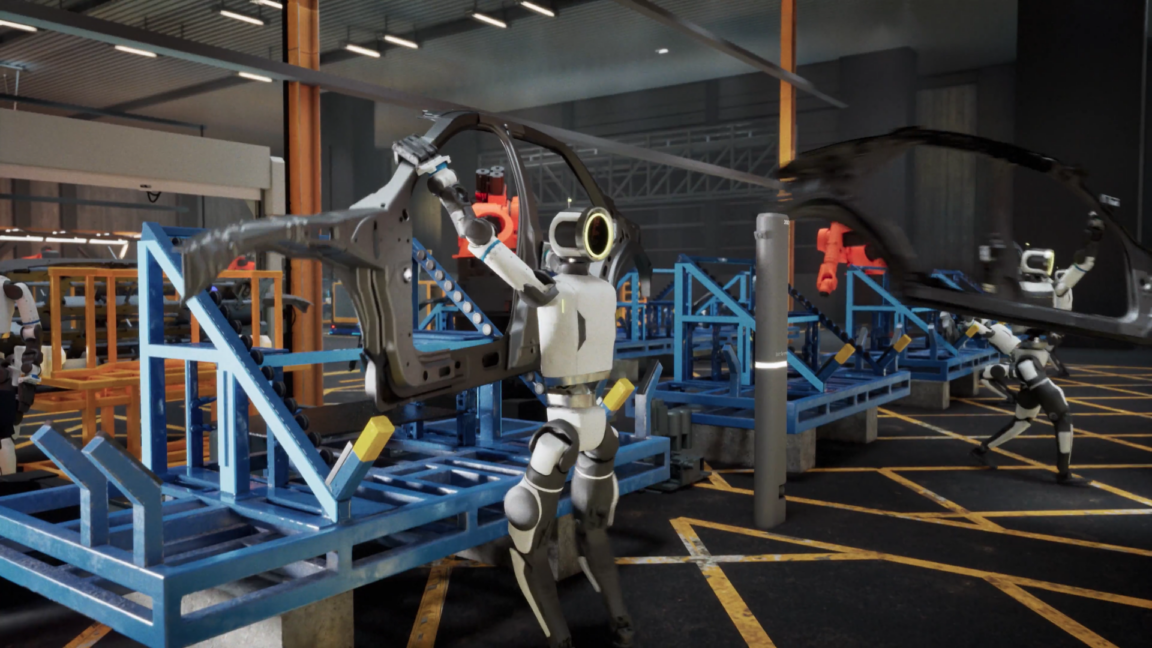
But you can make a soft transition, replace this or that without redesigning everything and take on huge risks. As long as it saves money it works.
So far humans can do FAR more complex work than robots can. The goal has to be to design a robot that you can program by telling and showing it what to do with human language. If you can do that and save money, then you have a robot that can truly scale. Instead of designing thousands of new factories, you have one robot that can be put into every factory on earth. And those robots will benefit from economies of scale.
Surely that’s very situational? Some cases have robots doing work that a human couldn’t possibly do whatsoever.
Yes, it varies a lot. But by and large cases where robots wildly outperform humans were automated decades ago, because the obvious benefits justified the cost and complexity of either building a bespoke robot or programming one to do the job well (all those robot arms you imagine swinging doors into place at the car factory)
The cases left over (and discussed here) are either requiring a level of flexibility that older designs of robot couldn’t handle, or where humans were pretty efficient at anyway, so the complex process of prepping a robot wasn’t justified.
But a robot that can be taught without programming (by any worker or their supervisor), and slots straight into an existing human-shaped hole? That could massively reduce the upfront cost, especially if economies of scale make the robot itself cheaper. possibly to the point that the robot could be worse at the job than a human and still be cheaper in the long run.