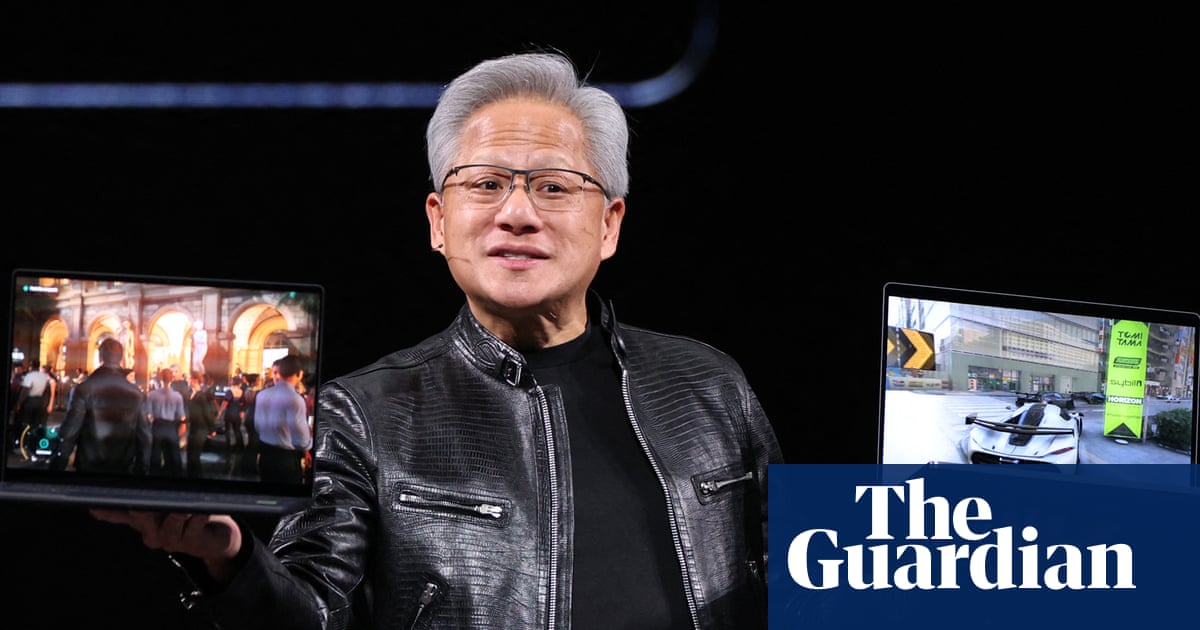
A combination of a microprocessor and a graphics chip, developed with help from Taiwan’s MediaTek, it is designed to run AI agents locally rather than relying on cloud computing.
From a privacy perspective, at least, this has potential.
It will allow agents to navigate PCs autonomously, replacing humans’ traditional mouse and keyboard interactions.
Yeah, no. These things are still far too unreliable. Anyway, if you look at most sci-fi set in the future with voice control, keyboards (or at least their touchscreen counterparts) are still very much present.
The second part is wholly software dependent, so let’s not conflate the two.
Having local hardware for local LLM (and other models too! there’s plethora use cases for AI models, e.g. easily tagging people in your photo library, automatic subtitles for videos, even realtime stuff, we could even have models that automatically categorise photos and sort them into albums based on previous patterns, and so on) is awesome. Not having to trust some random third party with your data is awesome.
Blending that in with a specially written agent that can interact with stuff is not awesome. The two should be separate, but problem is, most users won’t understand the benefit of this hardware without being given concrete examples of use cases like this.
I’m staunchly anti-genAI but consider other applications of traditional machine-learning less problematic. A purely local model for photo categorization seems, in theory, less objectionable to me. I’m sure models exist already but I’m purposefully out of the loop. Any suggestions for models I could look into? And just how much compute would something like that require?


From a privacy perspective, at least, this has potential.
Yeah, no. These things are still far too unreliable. Anyway, if you look at most sci-fi set in the future with voice control, keyboards (or at least their touchscreen counterparts) are still very much present.
We have this already. They’re called APUs.
The second part is wholly software dependent, so let’s not conflate the two.
Having local hardware for local LLM (and other models too! there’s plethora use cases for AI models, e.g. easily tagging people in your photo library, automatic subtitles for videos, even realtime stuff, we could even have models that automatically categorise photos and sort them into albums based on previous patterns, and so on) is awesome. Not having to trust some random third party with your data is awesome.
Blending that in with a specially written agent that can interact with stuff is not awesome. The two should be separate, but problem is, most users won’t understand the benefit of this hardware without being given concrete examples of use cases like this.
I’m staunchly anti-genAI but consider other applications of traditional machine-learning less problematic. A purely local model for photo categorization seems, in theory, less objectionable to me. I’m sure models exist already but I’m purposefully out of the loop. Any suggestions for models I could look into? And just how much compute would something like that require?