

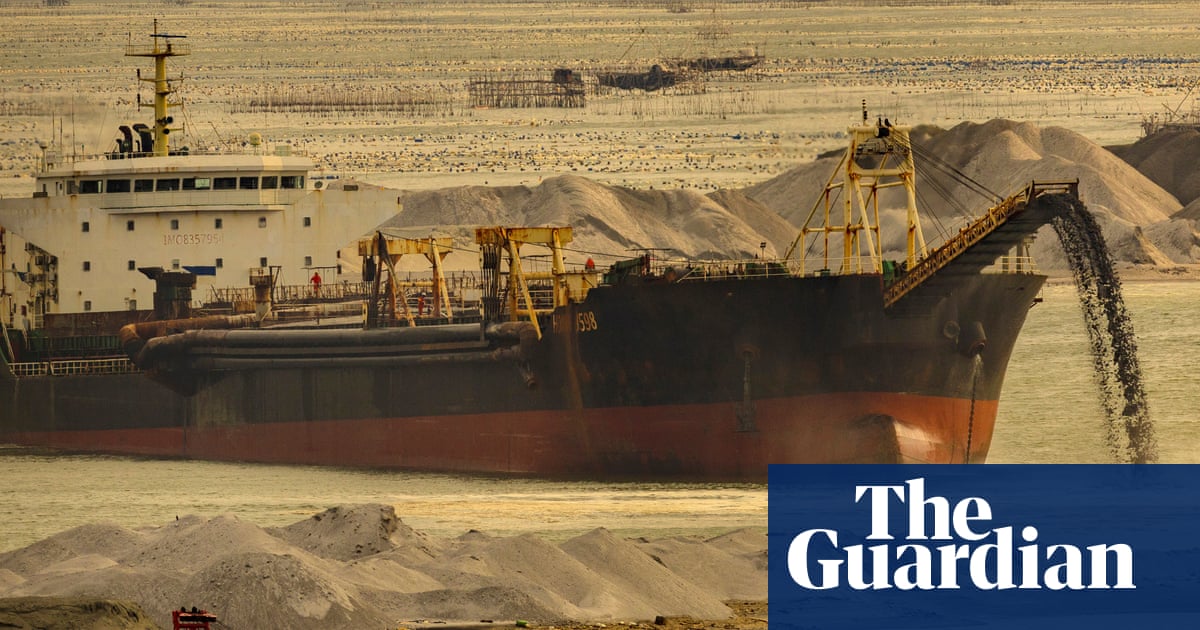
Malé is one of the world’s most overcrowded cities, but it faces double pressure. As well as a growing population, the capital of the Maldives is also threatened by rising sea levels. Owing to climate breakdown, its living space is shrinking.
So the justification for a land reclamation project seemed clear. Take sand from elsewhere in the archipelago and use it to build up the land available for Malé’s people. What could go wrong? After all, it’s only sand, right?
Around the world, urban development and industry is using sand at a rate of 50bn tonnes a year, a figure that is expected to grow. But a new UN report warns that sand is being extracted faster than it can be replenished, and that this is threatening livelihoods, ecosystems and the very structure of the natural world.
Pascal Peduzzi, the director of the Unep global resource information database Geneva, which prepared the report, said: “Sand is sometimes referred to as the unrecognised hero of development, but its essential role in sustaining the natural services on which we depend is even more overlooked. Sand is our first line of defence against sea level rise, storm surges, and salination of coastal aquifers – all hazards exacerbated by climate change.”
Wild that they used that title instead of: cities are sinking because of sea level rise
