

The Faustian myth warns us against making pacts with the devil. To trade something as invaluable as the soul for wealth, fame, and power, the story goes, is to diminish every facet of our existence, to suck the life out of our very core. But to sacrifice earthly glory, even our banal and temporary possessions—to humble ourselves in the eyes of God—for spiritual favor has been celebrated since the Old Testament and thought to restore, revive, and rejuvenate life. What, though, if your sacrifice provides neither earthly nor spiritual benefits?
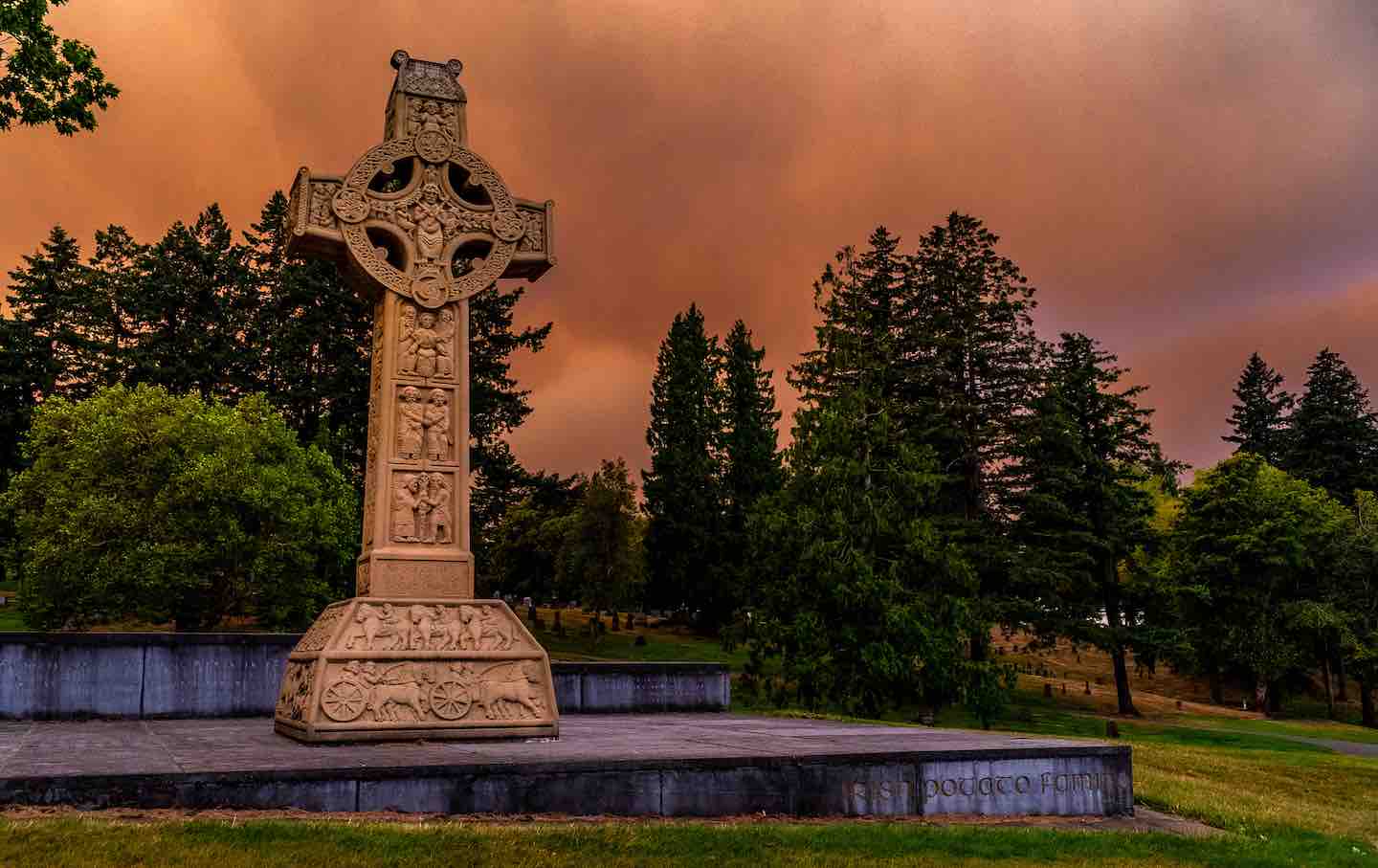
Jon Raymond’s novel God and Sex hinges on a pact—a “bargain,” as the protagonist, Arthur, calls it—between him and a higher power. Arthur ventures to the Wy’East Resort in Oregon, where Sarah, the married woman he loves, is spending the next few days on a retreat, to tell her that her husband, Phil, suspects she’s having an affair. A writer who has only ever experienced mediocre book sales but feels on the brink of a bestseller with his new work, Arthur isn’t exactly happy to be giving up precious writing time to make the trip. Returning home, he sees “the fuzz of gray coming over the sky, and the sun going blood-orange,” and his phone alerts him that a forest fire is raging near the retreat. Sarah’s phone goes straight to voicemail numerous times, so he turns around, heading right into the eye of the fire to find her. As he scours the burning forest, he pleads with a God and prays, “I’ll give you the most important thing I can imagine if only you allow her to continue to exist.”
But Arthur can’t leave it at that. “I thought these new words over and over, in different formulations, honing the bargain,” he discloses, as if he can revise, control, and bend the pact to his whims the way he can revise, control, and bend the “Tree Book” he has set out to write and whose composition overlays Raymond’s novel. Or perhaps to revise is to revive. “It was a part of a writer’s job, I believed, to resuscitate,” Arthur asserts. This more self-serving idea about writing is in the service of a book that tries to explore much more: our responsibility in the face of climate change, the relationship between faith and love, and writing’s purpose in times of both global and personal crises.